



Small Patch Seismic: High-Resolution, Cost-Effective 3D for Modern Land-Based Energy Projects
Updated November 2025
Table of Contents
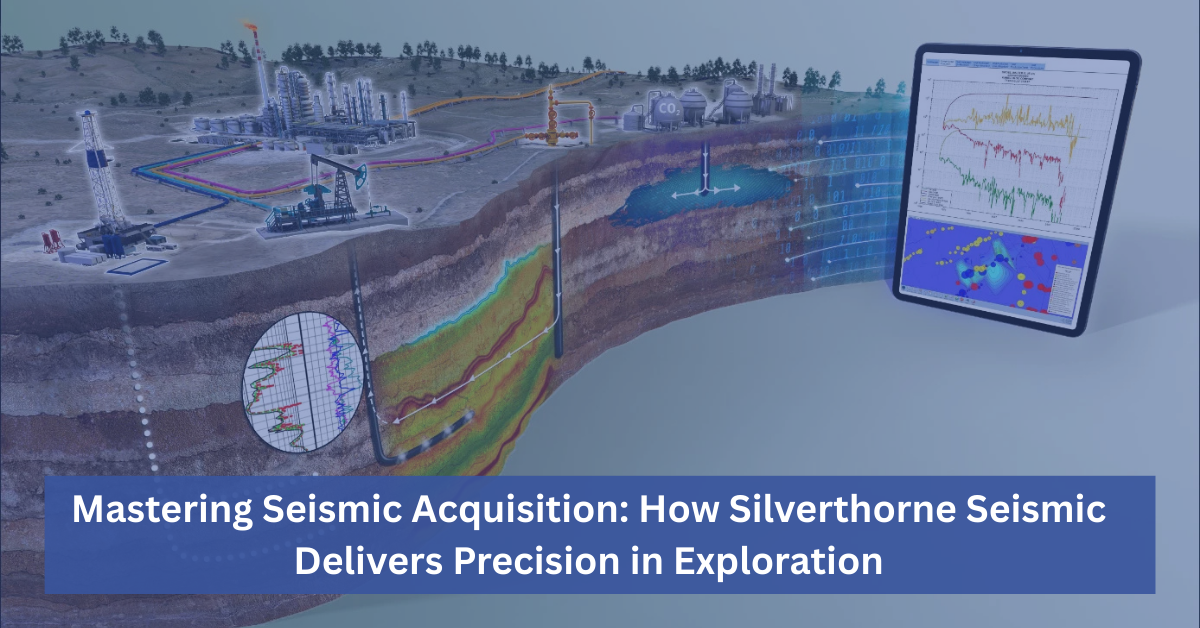
In today’s fast-paced oil and gas landscape, precision matters more than ever. Operators face increasing pressure to reduce drilling risk, maximize recovery, and accelerate project timelines—all while managing costs in volatile markets. Enter small patch seismic—a targeted, high-resolution 3D acquisition method that delivers detailed subsurface imaging over compact areas, making it an ideal solution for multi-well pads, infill drilling, and complex reservoir development.
Unlike traditional regional 3D surveys that cover hundreds of square miles and require months of planning and execution, small patch seismic focuses on strategic “postage-stamp” zones—typically 5 to 40 square miles of full-fold data. This approach provides superior resolution and clarity exactly where it’s needed: around wellbores, beneath drilling pads, and across high-interest fault or fracture corridors.
Why Small Patch Seismic is a Game-Changer
One of the core advantages of small patch seismic is its ability to generate a higher-resolution image of a specific subsurface volume compared to legacy or regional datasets. Modern processing techniques—including pre-stack depth migration (PSDM), full-waveform inversion (FWI), and AI-enhanced attribute analysis—extract maximum detail from densely sampled data, revealing:
– Micro-faults and fracture networks
– Sub-seismic stratigraphic traps
– Geomechanical stress variations
– Fluid contact anomalies
This level of detail is critical for accurate geosteering in long laterals, where even a 10-meter vertical error can mean missing the target zone entirely. With small patch 3D, drillers can steer with confidence, staying in the sweet spot and avoiding costly sidetracks.
When to Use Small Patch Seismic
Small patch acquisition shines in scenarios where speed, precision, and cost control are paramount:
| Use Case | Benefit |
|---|---|
| Multi-well pad development | One survey covers 8–16 laterals: ~$100K per well |
| Infill drilling in mature fields | Identifies bypassed pay and drainage shadows |
| No modern seismic coverage | Tactical data fill-in without regional expense |
| Complex structural environments | Maps faults, karsts, and collapse features |
| Geothermal site characterization | Defines fracture permeability and heat flow paths |
| CCUS project validation | Confirms caprock integrity and storage containment |
In areas lacking current or high-fold 3D data, small patch delivers a rapid, high-impact alternative to waiting years for a full-field re-shoot
The Small Patch Workflow: From Permit to Interpretation in 6–8 Weeks
The efficiency of small patch seismic begins with a streamlined, fit-for-purpose workflow:
- Permitting & Land Access
– Focused footprint minimizes landowner negotiations
– Typical surface area: 18–28 square miles (source spread)
– Full-fold target: 10–15 square miles (covers 8 bidirectional 2-mile laterals)
- Acquisition Design
– Dense receiver grids (e.g., 110–220 ft spacing)
– High-channel-count nodal systems (10,000+ channels)
– Vibroseis fleets optimized for rapid deployment
- Data Processing (Fast-Track)
– Noise attenuation with machine learning
– Velocity model building via tomography and FWI
– Pre-stack time or depth migration
– Deliverable in 3–4 weeks post-acquisition
- Inversion & Interpretation Prep
– Elastic inversion for brittleness, porosity, and stress
– AI-driven fault and horizon auto-picking
– Petrophysical integration with well logs
– Final volume ready in 6–8 weeks from spud
This end-to-end timeline is a fraction of conventional 3D projects, enabling operators to drill sooner, smarter, and with lower risk.
Cost Structure: High Value, Low Overhead
| Component | Typical Cost |
|---|---|
| Permitting & survey design | $50K–$100K |
| Acquisition (18–28 sq mi) | $500K–$800K |
| Processing & inversion | $200K–$300K |
| Interpretation & integration | $50K–$100K |
| Estimated Total Project Cost | $800K–$1.2M |
For an 8-well pad, this translates to ~$100K per well—a compelling ROI when compared to:
– Cost of a single sidetrack: $1.5M–$3M
– Value of recovered reserves from better placement: $2M–$10M+
Beyond Oil & Gas: Enabling the Energy Transition
Small patch seismic is increasingly adopted in non-hydrocarbon applications, where high-resolution imaging is essential for subsurface integrity and performance:
Geothermal Energy
– Maps fracture networks for enhanced geothermal systems (EGS)
– Identifies permeable zones and fluid pathways
– Reduces exploration risk in crystalline basement plays
Carbon Capture, Utilization, and Storage (CCUS)
– Validates caprock seal integrity with sub-meter resolution
– Monitors CO₂ plume migration via 4D small patch time-lapse
– Supports Class VI permitting with auditable seismic evidence
Technical Specifications at a Glance
| Parameter | Standard Small Patch |
|---|---|
| Full-fold area | 5–40 sq mi |
| Source density | 1–2 vibes per 10–20 acres |
| Receiver spacing | 110–220 ft |
| Fold | 120–240 |
| Frequency bandwidth | 6–120 Hz |
| Vertical resolution | ~15–25 ft (target zone) |
| Depth of interest | 4,000–18,000 ft TVD |
Why Operators Choose Silverthorne Seismic
At Silverthorne Seismic, we specialize in high-resolution 3D acquisition across North America’s most active basins. Our small patch programs are:
– Fully integrated: From permitting to final depth volume
– AI-augmented: Faster, more accurate interpretation
– Client-focused: Custom designs for your pad, your target, your timeline
Whether you’re drilling horizontal laterals in the Permian, redeveloping legacy fields in the Anadarko, or characterizing a geothermal pilot in the Basin & Range, small patch seismic delivers actionable intelligence—fast.
Overview
– Ideal Scale: 5–40 square miles of full-fold, high-resolution 3D
– Complete Workflow: Permitting → Acquisition → Processing → Inversion → Interpretation
– Timeline: 6–8 weeks from mobilization to final volume
– Cost: $800K–$1.2M (~$100K per well for 8-well pad)
– Applications: Oil & gas, geothermal, CCUS
– Resolution: Sub-seismic fault and fracture imaging
– ROI: 8–12x in reduced risk and enhanced recovery
Ready to de-risk your next project?
Contact Silverthorne Seismic today to design a small patch 3D program tailored to your drilling pad, reservoir challenge, or energy transition goal.
Request a Quote